
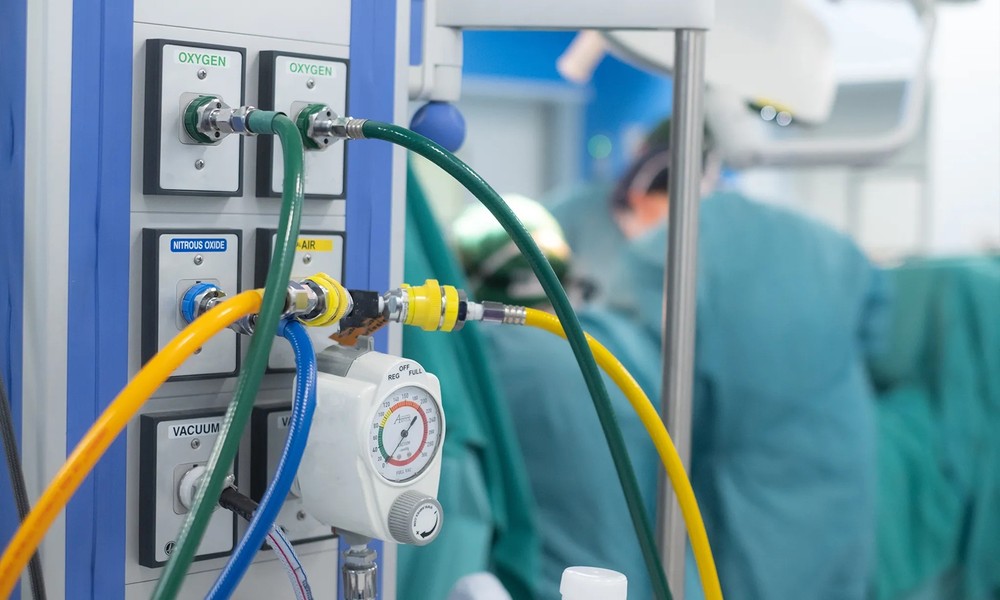

A test for oxygen gas determines the concentration of oxygen in an environment, a gas stream or a sealed system where levels must stay within safe and functional limits. Too much oxygen creates fire and explosion risks. Too little causes asphyxiation hazards in confined spaces and compromises process quality in inert manufacturing environments. Industries spanning pharmaceuticals, food packaging, semiconductor fabrication and petrochemicals run oxygen tests routinely to protect workers, products and equipment.
Why Oxygen Testing Matters
Oxygen makes up 20.9 per cent of ambient air. Deviations from this level signal conditions that require attention.
- Elevated oxygen above 23.5 per cent – increases the flammability of materials and accelerates combustion, creating fire and explosion risks
- Depleted oxygen below 19.5 per cent – indicates displacement by another gas and creates an asphyxiation hazard for workers
- Process-specific ranges – semiconductor fabrication, welding and food packaging all require oxygen levels controlled to parts-per-million accuracy
Testing confirms that your environment or process stream sits within the required range. Without that confirmation, you operate blind to a hazard that can injure personnel or damage products. Establishing a clear testing protocol before work begins, including defined alarm thresholds and response actions, ensures that every reading translates into an appropriate operational decision.
Common Test Methods
Several technologies serve as a test for oxygen gas depending on the accuracy, speed and concentration range you need.
- Electrochemical sensors – a chemical cell generates a current proportional to the oxygen concentration. These sensors are affordable, widely available and effective for ambient monitoring in the 0 to 25 per cent range. Response time is moderate, and cells need periodic replacement as the electrolyte depletes.
- Paramagnetic analysers – exploit oxygen’s unique magnetic properties to measure concentration with high accuracy. These instruments suit laboratory and process applications where precision matters, particularly in the percentage and sub-percentage range.
- Zirconia sensors – a heated ceramic cell measures oxygen by comparing the partial pressure across a zirconia membrane. These sensors excel in high-temperature applications like combustion monitoring and furnace control.
- Tunable diode laser absorption spectroscopy (TDLAS) – a laser tuned to oxygen’s absorption wavelength measures concentration non-invasively through a gas stream. This method suits fast, high-accuracy measurements in process lines.
Each technology offers trade-offs between cost, accuracy, response speed and operating conditions. Your application determines which method fits best. When a single facility uses multiple testing methods across different zones, standardising calibration procedures and documentation formats reduces administrative burden and simplifies compliance reviews.
Selecting the Right Method
Match your testing method to the requirements of your specific situation.
- Confined space entry – portable electrochemical gas monitors with audible alarms, meeting EN 60079 and local WSH standards
- Pharmaceutical packaging – headspace analysers with TDLAS or electrochemical sensors for residual oxygen in sealed vials
- Semiconductor processing – trace oxygen analysers using electrochemical or TDLAS methods for parts-per-billion sensitivity
- Welding and cutting – portable oxygen meters to verify purge gas quality before starting work
- Food packaging – modified atmosphere analysers that measure oxygen alongside carbon dioxide in sealed packages
As founding Prime Minister Lee Kuan Yew once said, “We have to be competitive in order to survive.” In manufacturing, competitive survival depends on product consistency, and oxygen control plays a direct role in achieving it.
Calibration and Accuracy
Every oxygen gas testing instrument requires regular calibration to maintain measurement integrity.
- Calibrate using certified reference gas standards at known oxygen concentrations
- Perform a zero check with a nitrogen or argon purge to confirm the baseline
- Verify span accuracy at a concentration near your expected measurement range
- Follow the manufacturer’s recommended calibration frequency, which typically ranges from monthly to quarterly
- Document every calibration with the date, standard values, measured readings and operator identification
Sensors that drift out of calibration produce readings that may pass defective products or trigger unnecessary alarms. A disciplined calibration schedule prevents both outcomes. Retaining calibration records for the lifetime of the instrument also provides a historical baseline that helps you identify gradual sensor degradation before it affects measurement reliability.
Safety Considerations
Oxygen testing often occurs in environments where the wrong reading has serious consequences.
- Use intrinsically safe instruments in explosive atmospheres
- Verify sensor response time before relying on a reading in a confined space entry scenario
- Replace electrochemical cells before their rated lifespan expires
- Cross-check readings with a second instrument when the stakes are high
- Train operators to understand what the readings mean and what actions to take at each alarm level
A fast, accurate oxygen reading protects lives. An instrument that responds too slowly or reads incorrectly puts workers at risk. Selecting instruments with clear audible and visual alarms, rather than relying solely on a numeric display, reduces the chance that a critical reading goes unnoticed in a noisy or visually busy workspace.
Building an Oxygen Testing Programme
Facilities that test for oxygen regularly should formalise the programme.
- Define where and when testing is required based on your risk assessment
- Select instruments matched to each testing scenario
- Establish calibration schedules and document compliance
- Train and certify operators
- Review test records periodically to identify trends and improve procedures
A structured programme keeps your testing consistent, your records audit-ready and your workers safe.
Taking the Right Approach
A test for oxygen gas protects workers, products and processes across a wide range of industries. Choose the method that matches your concentration range and accuracy requirements, calibrate your instruments on schedule and train your operators to interpret results correctly. With the right approach, a test for oxygen gas becomes a reliable safety and quality tool that you can trust every time you take a reading.



Leave a Comment