
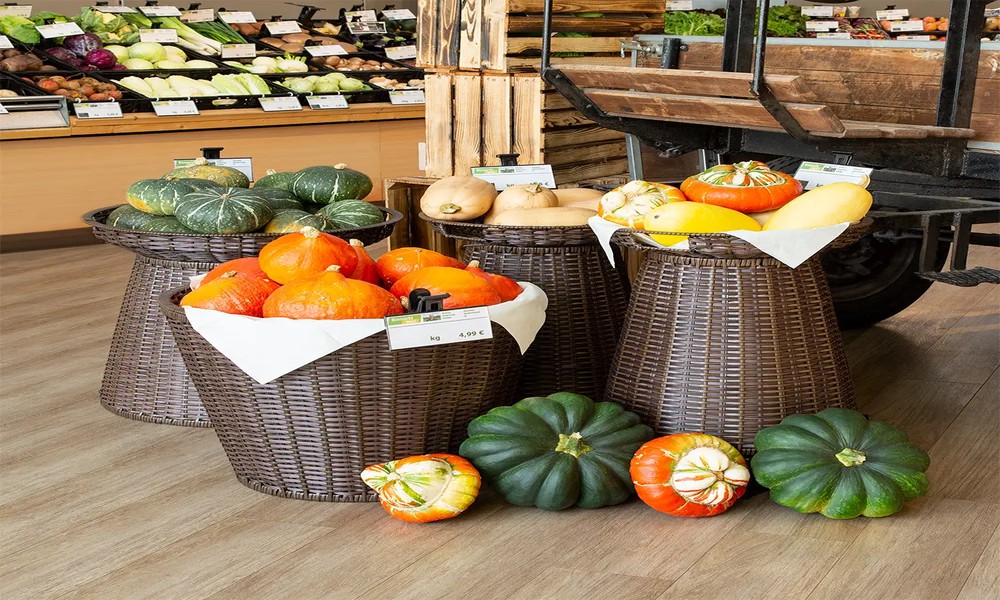

A vege basket that is built well solves three problems at once: it keeps fresh produce ventilated, it makes stock rotation simple, and it presents goods in a way that encourages purchase.
Why Ventilation Is the Starting Point
Fresh vegetables deteriorate most rapidly when moisture accumulates around them. A basket that restricts airflow creates a microclimate where condensation builds up, accelerating spoilage at the contact points between produce and container. The open lattice or mesh construction of a properly designed veggie basket allows air to circulate on all sides of the contents, drawing moisture away and extending shelf life measurably.
For retailers and wholesalers handling high volumes of fresh produce, this ventilation advantage translates directly into less waste and better margins. A head of lettuce that arrives vibrant and stays crisp longer reduces the frequency of markdowns and the cost of discarding unsellable stock.
Load Capacity and Structural Reliability
The produce is heavier than it looks. A fully loaded veggie basket carrying sweet potatoes, cabbage, or yams can exert considerable stress on the base and sidewall structure. Baskets that are not rated for the weight they are routinely asked to carry deform over time, losing their shape and eventually cracking.
Quality produce baskets are constructed from virgin-grade or food-safe recycled polypropylene with reinforced base structures and corner supports. They are tested for vertical stack loads, because in a storage room or cold room, baskets rarely sit individually – they are stacked four, six, or eight high, and the load on the base of the bottom basket in that column must be calculated and accounted for in the design.
“We want to create a first-world oasis in a third-world region.” – Lee Kuan Yew.
The same aspiration applies to produce handling. A well-designed storage and display system elevates the entire operation, from warehouse to retail shelf.
Choosing the Right Vege Basket Format
Not all fresh produce situations call for the same basket format. The best choice depends on:
- Produce type: round, irregular shapes like fruit and gourds need deeper baskets to prevent rolling; flat vegetables like leafy greens need shallower, wider containers to avoid compression
- Display method: baskets used for retail display benefit from lower front panels that allow customers to see and reach produce easily
- Stacking and transport: baskets that need to return empty through a distribution system benefit from a nesting or collapsible design to reduce return freight volume
Vege basket designs that address multiple functions – storage, transport, and retail display – offer the best value per unit because they eliminate the need for separate containers at each stage.
Hygiene and Cleaning Requirements
Food contact surfaces require regular cleaning. A veggie basket used in a wet market or supermarket environment encounters water, organic debris, and cleaning chemicals routinely. The material and construction must withstand repeated washing without warping, cracking, or harbouring bacteria in surface imperfections.
Smooth interior surfaces are easier to sanitise than textured ones. Drain holes in the base allow rinse water to escape fully, preventing standing water that would recontaminate a just-cleaned basket. Handle designs that avoid deep recesses or trapped corners reduce cleaning time and improve hygiene reliability.
Optimising Display for Sales
A veggie basket used on the retail floor is doing more than storing produce – it is influencing purchasing decisions. Display considerations include:
- Colour: neutral tones keep visual focus on the produce rather than the container
- Front-access design: angled or open-front baskets invite customers to pick directly, which studies consistently show increases unit sales
- Tiered stacking systems: multi-level display racks using compatible baskets make better use of vertical space and allow a greater variety of produce in a smaller footprint
- Labelling surfaces: a flat surface on the front panel accommodates price tags and product information without resorting to tape that leaves residue or obscures the basket structure
Making the System Work Long-Term
The value of a good fresh produce storage basket system compounds over time if the baskets are maintained correctly. Inspect units regularly for cracks that could harbour bacteria or compromise stacking integrity. Remove damaged baskets from rotation promptly. Store empty baskets in a clean, dry area and establish a cleaning schedule that keeps the entire inventory in good condition.
Businesses that manage their veggie basket inventory well find that the initial investment pays back through reduced produce waste, faster stock rotation, and a retail presentation that keeps customers returning for consistently fresh goods.




Leave a Comment