
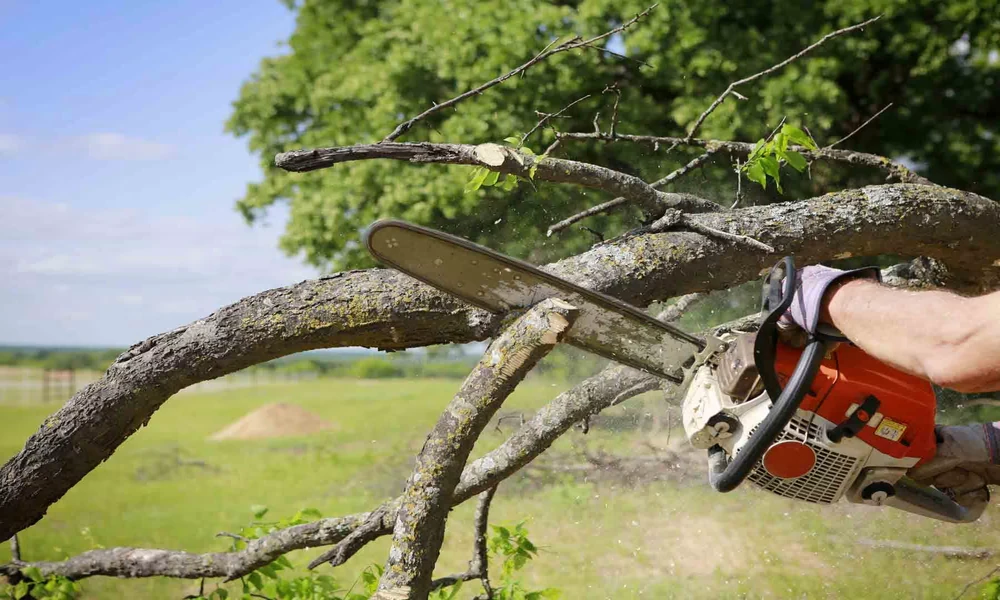

Tree cutting services in Singapore cover a range of work that goes well beyond what the term suggests. Removing a tree safely in an urban environment requires planning, the right equipment, and a thorough understanding of the tree’s structure, its proximity to structures and utilities, and the legal framework that governs what work can be done at all. Done by a qualified team, tree removal is a controlled, efficient process. Done badly, it creates risks that affect not just the tree owner but neighbours, infrastructure, and anyone nearby.
When Tree Removal Becomes Necessary
Most trees on private property in Singapore are maintained rather than removed. Pruning, structural management, and health treatment extend the useful life of trees that are worth keeping. Removal becomes the right decision in a defined set of circumstances.
A tree that has died and poses falling risk to property or people needs to come down. Decay that has progressed beyond what treatment can arrest, often identified by a hollow trunk, fungal growth at the base, or significant crown dieback, creates structural instability that no pruning programme addresses. Trees damaged in storms, with major limbs or the main stem split, may be too compromised to retain safely.
Occasionally, a tree has grown into a position that cannot be managed by pruning alone – pressing against a building structure, undermining a foundation, or growing into a shared boundary in a way that causes ongoing dispute. In these situations, removal is sometimes the more practical long-term solution than repeated corrective pruning.
Navigating Singapore’s Tree Permit Framework
Tree cutting on private property in Singapore is regulated under the Parks and Trees Act. Trees with a girth above 100 centimetres, measured one metre above ground, require a NParks permit before they can be felled. Removing a protected tree without a permit carries fines of up to $50,000.
This framework exists to protect Singapore’s significant tree canopy, and it means that property owners planning tree removal need to check permit requirements before engaging any contractor. A qualified tree removal service will advise on whether a permit is required for the specific tree in question and assist with the application process where needed.
Homeowners can reference NParks guidance on the Parks and Trees Act permit requirements for current thresholds and application procedures.
How Safe Tree Removal Is Carried Out
The process of removing a tree safely in an urban environment is more complex than simply cutting at the base and letting it fall. For trees near structures, fences, power lines, or neighbouring properties, a controlled removal technique is required.
The arborist assesses the tree’s lean, the distribution of weight in the canopy, and the available drop zones. Where a tree cannot be felled in a single direction safely, it is dismantled from the top down in sections. Each section is rigged with ropes before cutting so it can be lowered in a controlled manner rather than dropped. This approach allows removal of trees in confined spaces that would be impossible to fell in a single cut.
As former Prime Minister Lee Hsien Loong has noted about professional standards in Singapore, “We hold ourselves to the highest standards because the consequences of failure are real.” Tree removal in a dense urban environment is exactly the kind of work where professional standards matter.
Stump Removal and Site Clearance
Tree removal is typically followed by stump grinding. Leaving a stump in place creates a habitat for wood-boring pests and the stump will eventually decay, potentially causing subsidence or damage to nearby paving as it collapses.
Stump grinding reduces the stump to below ground level, clearing the site for replanting, paving, or other use. The site is left clean, with the chipping and debris cleared or chipped for use as mulch.
Choosing the Right Tree Removal Team
A qualified tree cutting service Singapore contractor will carry full public liability insurance that covers tree work specifically. They will have trained arborists on their team rather than general labour. They will assess the removal site thoroughly before quoting, advise on permit requirements, and provide a clear work plan.
Contractors who quote without inspecting, who cannot demonstrate relevant qualifications, or who do not carry appropriate insurance are not worth engaging for work that carries genuine safety and legal consequences.
For property owners in Singapore needing a tree removed safely, efficiently, and within the regulatory framework, professional tree cutting services from a qualified team is the only responsible approach.




Leave a Comment