
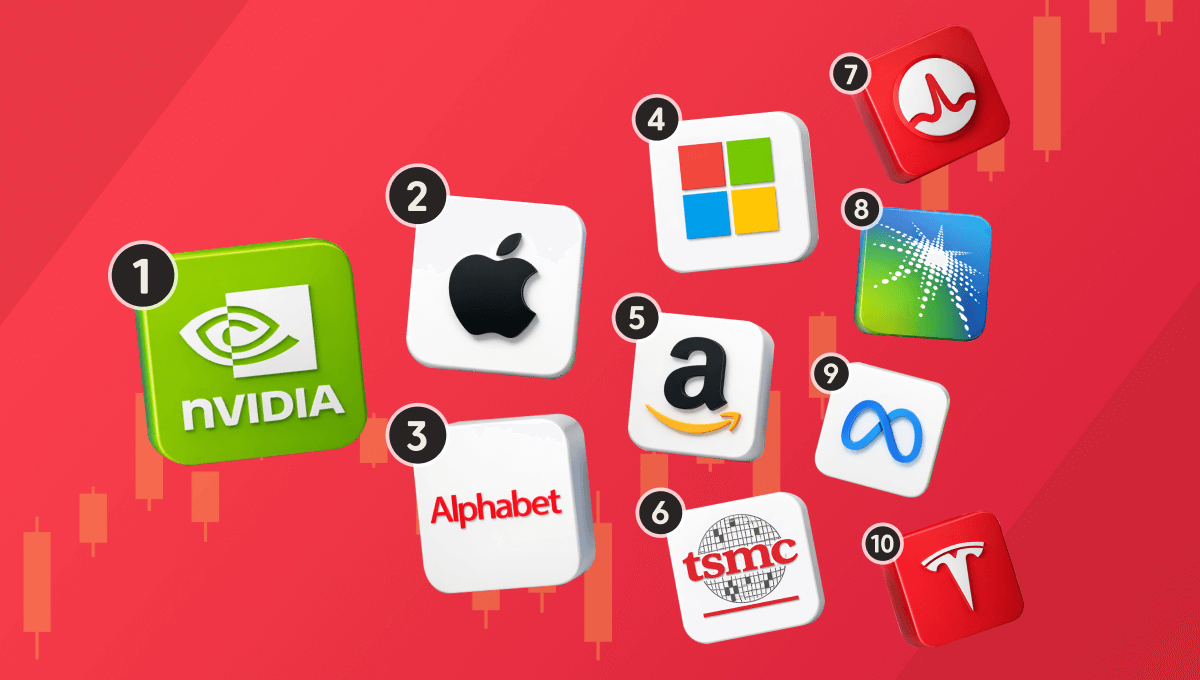

By market capitalization, Nvidia has surged to become the biggest company in the world in 2026, recently crossing the historic $5 trillion mark due to the relentless demand for AI infrastructure. It currently leads a tight race against other tech giants like Alphabet and Apple, which continue to dominate the global economic landscape.
But ‘biggest’ is actually a loaded word. The answer changes completely depending on whether you mean market cap, annual revenue, number of employees, or total assets. Let’s break all of it down.
How We Measure ‘Biggest’: Four Very Different Answers
| Measurement | What It Represents | Current #1 |
| Market Capitalization | Total stock market value of all shares | Apple / Microsoft (~$3T) |
| Annual Revenue | Total money earned from sales/operations | Walmart (~$650B/year) |
| Number of Employees | Total global workforce | Walmart (~2.1 million employees) |
| Total Assets | Everything the company owns | Industrial & Commercial Bank of China |
The list changes dramatically based on which lens you use. Tech companies dominate market cap. Retailers and energy companies lead on revenue. Banks lead on assets.
Top 5 Companies by Market Capitalization (2025)
| Rank | Company | Market Cap (Approx.) | Sector | HQ Country |
| 1 | Microsoft | ~$3.1 Trillion | Technology / Cloud | USA |
| 2 | Apple | ~$3.0 Trillion | Consumer Tech / Services | USA |
| 3 | Nvidia | ~$2.8 Trillion | Semiconductors / AI | USA |
| 4 | Amazon | ~$2.0 Trillion | E-commerce / Cloud | USA |
| 5 | Alphabet (Google) | ~$2.0 Trillion | Advertising / Technology | USA |
Five of the top five are American technology companies. This concentration would have seemed implausible twenty years ago – and it has real implications for global regulatory debates.
Top 5 Companies by Revenue – A Very Different List
| Rank | Company | Annual Revenue | Sector | HQ Country |
| 1 | Walmart | ~$650 Billion | Retail | USA |
| 2 | Amazon | ~$575 Billion | E-commerce / Cloud | USA |
| 3 | Saudi Aramco | ~$500 Billion | Oil & Energy | Saudi Arabia |
| 4 | State Grid Corporation | ~$460 Billion | Utilities / Energy | China |
| 5 | Apple | ~$385 Billion | Consumer Technology | USA |
Walmart sells more stuff than any company on earth – but its market cap is a fraction of Apple’s. That gap reflects something important: investors pay a premium for scalable software margins over thin retail margins.
The Giants People Forget About
State-owned enterprises often get left out of these conversations because they don’t trade on public markets. China’s State Grid, ICBC (banking), and PetroChina are colossal organizations by any measure – but their valuations are harder to compare directly.
Saudi Aramco is the standout exception. It’s partially publicly traded and regularly ranks as the world’s most profitable company – generating more net income in some years than Apple. Its market cap has exceeded $2 trillion, making it one of the few non-American companies competitive at the very top.
What Makes a Company ‘The Biggest’ in Real Terms?
| If you care about… | Look at… |
| Investment potential | Market capitalization and growth rate |
| Economic output | Revenue and gross profit |
| Employment impact | Workforce size and geographic spread |
| Financial stability | Total assets and debt ratios |
| Raw profitability | Net income and profit margin |
The Company That Employs the Most People Might Surprise You
It’s not Amazon. It’s not Apple. It’s Walmart – with over 2.1 million employees globally, it’s the largest private employer on the planet. The US Department of Defense employs more people, but as a government entity it doesn’t count in corporate rankings.
Amazon is close behind at roughly 1.5 million employees. But both of these numbers are shrinking as warehouse automation accelerates – a trend worth watching over the next decade.
Why Rankings Keep Shifting
Market cap fluctuates every trading day. A single earnings miss can drop a company by $100 billion in an afternoon – and a single AI announcement can add that back by evening.
In 2023, Nvidia added more market cap in a single year than most companies are worth in total – driven entirely by AI chip demand. Rankings at the trillion-dollar scale are now more volatile than they’ve ever been.
Final Thought
There’s no clean answer to ‘what’s the biggest company in the world’ – and that’s worth sitting with. The companies that move markets, employ the most people, generate the most profit, and own the most assets are not the same companies.
What matters is knowing which metric matters for your purpose – investing, career decisions, market research, or just curiosity. Each lens reveals something different about how the global economy actually works.




Leave a Comment